

 Nederlands
 Deutsch
 Svenska
 Polski
 Suomi
Suomi Español
 Français
 Português
 العربية
 Bahasa Melayu
 Italiano
 ไทย
ไทย Türkçe
 日本語
日本語 Български
 Română
 Ελληνικά
 Dansk
Dansk 简体中文
简体中文 繁體中文
繁體中文 Afrikaans
 Shqip
Shqip አማርኛ
አማርኛ Հայերեն
 Azərbaycan dili
 Euskara
 Беларуская мова
 বাংলা
বাংলা Bosanski
 Català
 Cebuano
 Chichewa
 Corsu
Corsu Hrvatski
 Čeština
 Esperanto
 Eesti
Eesti Filipino
 Frysk
Frysk Galego
 ქართული
 ગુજરાતી
 Kreyol ayisyen
 Harshen Hausa
 Ōlelo Hawaiʻi
 עִבְרִית
 हिन्दी
 Hmong
Hmong Magyar
 Íslenska
 Igbo
Igbo Bahasa Indonesia
 Gaelige
 Basa Jawa
 ಕನ್ನಡ
ಕನ್ನಡ Қазақ тілі
 ភាសាខ្មែរ
 한국어
한국어 كوردی
كوردی Кыргызча
 ພາສາລາວ
 Latin
Latin Latviešu valoda
 Lietuvių kalba
 Lëtzebuergesch
 Македонски јазик
 Malagasy
 മലയാളം
 Maltese
 Te Reo Māori
 मराठी
मराठी Монгол
 ဗမာစာ
ဗမာစာ नेपाली
 Norsk bokmål
 پښتو
پښتو فارسی
فارسی ਪੰਜਾਬੀ
 Русский
 Samoan
 Gàidhlig
 Српски језик
 Sesotho
 Shona
Shona سنڌي
سنڌي සිංහල
සිංහල Slovenčina
 Slovenščina
 Afsoomaali
 Basa Sunda
 Kiswahili
 Тоҷикӣ
 தமிழ்
தமிழ் తెలుగు
 Українська
 اردو
اردو O‘zbekcha
 Tiếng Việt
 Cymraeg
 isiXhosa
 יידיש
יידיש Yorùbá
 Zulu
Zulu
In the modern era of slots, paytables are no longer just a quick way to look up how much certain symbols pay. As games become more feature-heavy and bonuses become more complex, more than ever, players and reviewers alike rely on them to keep track of what’s going on. Knowing how to read the paytable is an essential skill for any player looking for an advantage, which is where this article swoops in to save the day.
In this article, we’ll walk you through everything you need to know about reading paytables. While it’s not a definitive guide, it’ll touch on all of the most important things players need to know.
Payouts Hint at Slot Volatility
Rather than recap our earlier slot paytable guide, we’ll touch on some more advanced concepts here. As such, if you’re looking for a basic breakdown, check out the linked guide while we proceed with how a paytable can tell you a game’s volatility.
Nowadays, most software providers are upfront with this information. Some, like Pragmatic Play, even put the information directly in the paytable, which gets a thumbs up from us. However, when a developer doesn’t share that information, a bit of detective work with potential payouts can give you a hint at what to expect.
In general, we recommend looking for two indicators. First, look at the difference between the highest-paying symbol and the second or third-highest icon. If there’s a big gap between the top prize and the ones beneath it, you’re looking at a highly volatile slot, as the math leans towards a rare maximum win.
Another way to check volatility is to look at the payouts for the lowest-paying icons, like playing card royals. If the rewards are less than your total bet, odds are you’re playing a high-variance game. Meanwhile, slots where low-value symbols at least return your stake tend towards lower volatility.
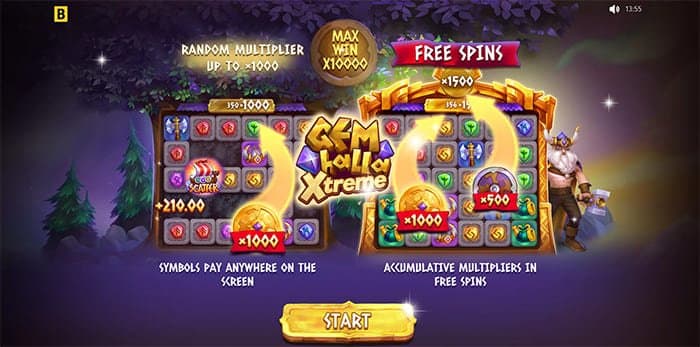 Mighty Thor is back in Gemhalla Xtreme video slot by BGaming.
Suss Out the Hit Frequency
The paytable can also be used to estimate the hit frequency – how often you’ll win while playing the game. While this doesn’t beat having the raw data from the developer, it’s still an indicator worth keeping an eye on.
- Look at the top symbols and see how many icons are required to score a win. Games that let you win with just two top symbols instead of three usually have a higher hit frequency.
- Another way to check is to look at the number of potential winning symbols in the paytable. A game with 12-15 total icons will result in crowded reels where it’s much more difficult to score payouts than if the slot only has 5-7 symbols.
Where’s the RTP?
Anyone who played a lot of slots knows the importance of RTP. However, two games with the same RTP can feel vastly different to play. That’s because the RTP is ‘hiding’ in different areas of the game.
For example, modern bonus-heavy games frequently push all the major winning potential in those features. As a result, the base game can feel dull, serving little more than filler. It’s no surprise that many players are returning to classic-style games where standard payouts feel more substantial.
It’s a similar story with standard paylines versus alternate payment systems like Megaways or Cluster Pays. The latter feature bigger playing areas and bonus rounds like cascading reels. Because of that, the payouts are much smaller, and players have to stack dozens of wins to get anything substantial.