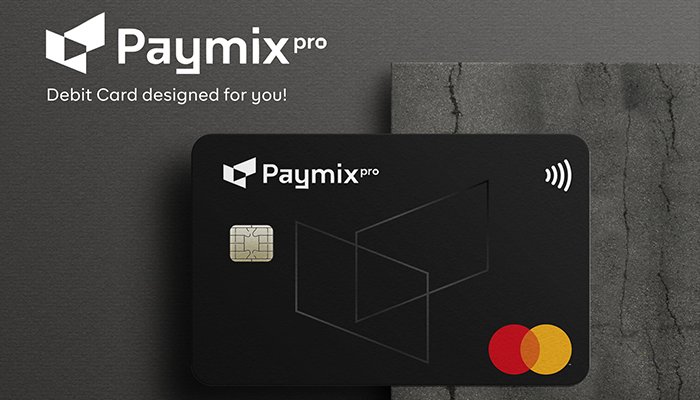
PayMix Pro is operated by Paymix Ltd., a Malta-based financial corporation. It received its license from the Malta Financial Services Authority in 2015. Since its restructuring in 2018, the company has modernized its business practice and now offers the latest, safest, and most transparent transactions. It provides dedicated IBANs, corporate credit cards, SEPA, and non-SEPA transactions in 60+ currencies. Paymix Pro Card
PayMix Pro Account
Once you have a PayMix Pro account, you can get a PayMix Pro prepaid card, to which you can load funds and use them conveniently wherever and whenever you want. To manage both your account and prepaid card, just access the PayMix Pro’s web portal. The main currency of PayMix Pro is euro.
How to Deposit with PayMix Pro Card?
To make a deposit with your PayMix Pro card, sign into the web portal. Click on ‘Payments’, then choose the ‘Make a SEPA transfer’ or ‘Make a non-SEPA transfer’ option. Upon providing the beneficiary’s IBAN, you will receive a BIC/SWIFT. Following that, you need to click on ‘Create Payment’ and ‘Proceed to Authorization’. For security reasons, you will be required to input a validation code that you will receive by SMS.
How to Withdraw with PayMix Pro Card?
Withdrawing money with PayMix Pro is quite easy with your MasterCard debit card. To collect money from your ATM, simply insert your card and enter your PIN. You can also request a payment at any bank counter or retail store offering a cashback facility. A fee of €5 will be charged for ATM withdrawals and €1 for cash advances through POS at banks.
No. Paymix Ltd. applies maintenance, transaction and other general fees.
Transfer Time and Fees
SEPA transfers received before 4 PM and non-SEPA transfers received before 1 PM on a work day are processed on the same day. The incoming funds through bank accounts have a fee of between €0.20 and €250 depending on the amount, but there is no fee on money received from other accounts.
Security
PayMix Pro is transparent and safe, and uses state-of-the-art encryption and firewalls to eliminate fraud. All clients’ transactions are monitored and funds are stored in European Central Banks.


 Nederlands
 Deutsch
 Svenska
 Polski
 Suomi
Suomi Español
 Français
 Português
 العربية
 Bahasa Melayu
 Italiano
 ไทย
ไทย Türkçe
 日本語
日本語 Български
 Română
 Ελληνικά
 Dansk
Dansk 简体中文
简体中文 繁體中文
繁體中文 Afrikaans
 Shqip
Shqip አማርኛ
አማርኛ Հայերեն
 Azərbaycan dili
 Euskara
 Беларуская мова
 বাংলা
বাংলা Bosanski
 Català
 Cebuano
 Chichewa
 Corsu
Corsu Hrvatski
 Čeština
 Esperanto
 Eesti
Eesti Filipino
 Frysk
Frysk Galego
 ქართული
 ગુજરાતી
 Kreyol ayisyen
 Harshen Hausa
 Ōlelo Hawaiʻi
 עִבְרִית
 हिन्दी
 Hmong
Hmong Magyar
 Íslenska
 Igbo
Igbo Bahasa Indonesia
 Gaelige
 Basa Jawa
 ಕನ್ನಡ
ಕನ್ನಡ Қазақ тілі
 ភាសាខ្មែរ
 한국어
한국어 كوردی
كوردی Кыргызча
 ພາສາລາວ
 Latin
Latin Latviešu valoda
 Lietuvių kalba
 Lëtzebuergesch
 Македонски јазик
 Malagasy
 മലയാളം
 Maltese
 Te Reo Māori
 मराठी
मराठी Монгол
 ဗမာစာ
ဗမာစာ नेपाली
 Norsk bokmål
 پښتو
پښتو فارسی
فارسی ਪੰਜਾਬੀ
 Русский
 Samoan
 Gàidhlig
 Српски језик
 Sesotho
 Shona
Shona سنڌي
سنڌي සිංහල
සිංහල Slovenčina
 Slovenščina
 Afsoomaali
 Basa Sunda
 Kiswahili
 Тоҷикӣ
 தமிழ்
தமிழ் తెలుగు
 Українська
 اردو
اردو O‘zbekcha
 Tiếng Việt
 Cymraeg
 isiXhosa
 יידיש
יידיש Yorùbá
 Zulu
Zulu