

 Nederlands
 Deutsch
 Svenska
 Polski
 Suomi
Suomi Español
 Français
 Português
 العربية
 Bahasa Melayu
 Italiano
 ไทย
ไทย Türkçe
 日本語
日本語 Български
 Română
 Ελληνικά
 Dansk
Dansk 简体中文
简体中文 繁體中文
繁體中文 Afrikaans
 Shqip
Shqip አማርኛ
አማርኛ Հայերեն
 Azərbaycan dili
 Euskara
 Беларуская мова
 বাংলা
বাংলা Bosanski
 Català
 Cebuano
 Chichewa
 Corsu
Corsu Hrvatski
 Čeština
 Esperanto
 Eesti
Eesti Filipino
 Frysk
Frysk Galego
 ქართული
 ગુજરાતી
 Kreyol ayisyen
 Harshen Hausa
 Ōlelo Hawaiʻi
 עִבְרִית
 हिन्दी
 Hmong
Hmong Magyar
 Íslenska
 Igbo
Igbo Bahasa Indonesia
 Gaelige
 Basa Jawa
 ಕನ್ನಡ
ಕನ್ನಡ Қазақ тілі
 ភាសាខ្មែរ
 한국어
한국어 كوردی
كوردی Кыргызча
 ພາສາລາວ
 Latin
Latin Latviešu valoda
 Lietuvių kalba
 Lëtzebuergesch
 Македонски јазик
 Malagasy
 മലയാളം
 Maltese
 Te Reo Māori
 मराठी
मराठी Монгол
 ဗမာစာ
ဗမာစာ नेपाली
 Norsk bokmål
 پښتو
پښتو فارسی
فارسی ਪੰਜਾਬੀ
 Русский
 Samoan
 Gàidhlig
 Српски језик
 Sesotho
 Shona
Shona سنڌي
سنڌي සිංහල
සිංහල Slovenčina
 Slovenščina
 Afsoomaali
 Basa Sunda
 Kiswahili
 Тоҷикӣ
 தமிழ்
தமிழ் తెలుగు
 Українська
 اردو
اردو O‘zbekcha
 Tiếng Việt
 Cymraeg
 isiXhosa
 יידיש
יידיש Yorùbá
 Zulu
Zulu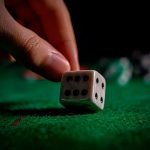
The Gambler’s Fallacy, or the Monte Carlo fallacy, happens when a person wrongly believes that a particular random event is more or less conditioned by a previous event or events. Such thinking is incorrect, for past events do not influence the likelihood of certain future events. No event is more or less likely, given a series of previous events.
The Casino de Monte-Carlo in Monaco first observed this occurrence in 1913, hence its second moniker. Each event should be regarded as independent, with its outcome having no bearing on other events, present or past. Interestingly, the gambler’s fallacy is often committed by traders and investors who believe a certain stock will gain or lose value after a series of opposite outcomes.
Roulette, lotto balls, coins, and other games of chance do not have memory, so it is a new, random game each time a person gambles. The odds are always the same, even though a person believes they are owed a win. Read the article to understand the gambler’s fallacy better and know how to avoid such traps.
Understanding the Problem
Gamblers often misunderstand the nature of random events, thus creating numerous misconceptions. Many of their erroneous or fallacious beliefs are based on their personal attitude towards life, luck, prediction and chances. We must draw a line between unrealistic beliefs and reality to understand the nature of the mistakes made by players.
The basic issue we must be aware of is the initial misconception that players can beat the odds and win the game. Even though some players know the odds and how everything works, they still think they can beat them and win. Some experts say this is not a wrongful belief, but past experiences with certain random events create a false impression.
Moreover, people are naturally predisposed to look for order or patterns, so it is difficult to persuade them that long winning or losing streaks are always random. Some people believe that they can influence random events, finding their randomness mysterious and alluring. Conversely, other players do not buy the concept of a random event, believing the casino fixes every round.
The gambler’s fallacy starts from misjudging the randomness and independence of a particular series of events. It includes the wrong conclusion that the next event will have the opposite result compared to the previous ones. It is easy to fall prey to the gambler’s fallacy, but it has no realistic foundation.
 The gambler’s fallacy is the mistaken belief that past random events affect future outcomes.
Mathematical Concept
Randomness is a mathematical concept, but the predictability of random occurrences is irrelevant. We call a certain event random if we do not know its outcome, but even the most random events could probably be determined. However, these events and their consequences are virtually impossible for a player to predict.
In addition, various random events do not have the same probability; some are more likely to happen than others. This claim particularly applies to the joint events’ chances or the one that compares one event to another. Many players hold fallacious conceptions of a random chance’s nature. The solution is to explore the concepts of probability and randomness.
Many people have gambling problems due to not understanding these. However, preventing problematic gambling starts with correcting misconceptions. One of the most common examples includes a belief that the coin will display tails after 10 heads, but the odds are always strictly 50/50. It means the coin flips are not in any way related to any previous such occurrence.
The likelihood of the coin displaying heads or tails is invariably 50%, where each coin is independent. All previous instances have no bearing on the future ones. However, it would not be wise to bet that 11 flips would result in 11 heads, for such probability is extremely low. However, if 10 flips have already produced 10 heads, the likelihood of it happening next time is 50%. Believing that the 11th head is less likely to turn up is a typical example of the gambler’s fallacy.
Fallacious Beliefs in Gambling
The most common erroneous beliefs can be classified as gambler’s fallacy and illusion of control. One of the most common misconceptions is that these events are continuously erratic when, in fact, they can happen in long streaks. Many players think things even out at the end, which is never proved, mathematically or statistically.
Numerous players wrongly believe that a certain number is due to come if it has not turned up yet. However, a particular number might never appear, for roulette balls, dice, or coins have no memories. The independence of events confirms this fact. Furthermore, players think they are due to win if a streak of losses has happened, but it is not true. The past never predetermines the outcome.
Some numbers might occur more often than the rest, but it usually happens due to a technical error and nothing else. It is also not true there are no patterns in random events. Some patterns can exist, but no future events would depend on any of them. You cannot beat the casino by observing what will happen. Nothing is certain about gambling, and the events are entirely mutually independent. It means no special betting systems, superstitions and lucky charms work.
How to Avoid the Fallacy?
The most well-known example happened in Monte Carlo in 1913, when people bet the roulette ball would fall on red. Millions were lost after it happened upon long streaks of black. The fallacy dates back to Laplace, who wrote about it more than 200 years ago. Letting go of the belief that previous events can influence future ones is a fantastic beginning.