

 Nederlands
 Deutsch
 Svenska
 Polski
 Suomi
Suomi Español
 Français
 Português
 العربية
 Bahasa Melayu
 Italiano
 ไทย
ไทย Türkçe
 日本語
日本語 Български
 Română
 Ελληνικά
 Dansk
Dansk 简体中文
简体中文 繁體中文
繁體中文 Afrikaans
 Shqip
Shqip አማርኛ
አማርኛ Հայերեն
 Azərbaycan dili
 Euskara
 Беларуская мова
 বাংলা
বাংলা Bosanski
 Català
 Cebuano
 Chichewa
 Corsu
Corsu Hrvatski
 Čeština
 Esperanto
 Eesti
Eesti Filipino
 Frysk
Frysk Galego
 ქართული
 ગુજરાતી
 Kreyol ayisyen
 Harshen Hausa
 Ōlelo Hawaiʻi
 עִבְרִית
 हिन्दी
 Hmong
Hmong Magyar
 Íslenska
 Igbo
Igbo Bahasa Indonesia
 Gaelige
 Basa Jawa
 ಕನ್ನಡ
ಕನ್ನಡ Қазақ тілі
 ភាសាខ្មែរ
 한국어
한국어 كوردی
كوردی Кыргызча
 ພາສາລາວ
 Latin
Latin Latviešu valoda
 Lietuvių kalba
 Lëtzebuergesch
 Македонски јазик
 Malagasy
 മലയാളം
 Maltese
 Te Reo Māori
 मराठी
मराठी Монгол
 ဗမာစာ
ဗမာစာ नेपाली
 Norsk bokmål
 پښتو
پښتو فارسی
فارسی ਪੰਜਾਬੀ
 Русский
 Samoan
 Gàidhlig
 Српски језик
 Sesotho
 Shona
Shona سنڌي
سنڌي සිංහල
සිංහල Slovenčina
 Slovenščina
 Afsoomaali
 Basa Sunda
 Kiswahili
 Тоҷикӣ
 தமிழ்
தமிழ் తెలుగు
 Українська
 اردو
اردو O‘zbekcha
 Tiếng Việt
 Cymraeg
 isiXhosa
 יידיש
יידיש Yorùbá
 Zulu
Zulu
Poker is one of the most popular casino games and has been the cornerstone of gambling culture for centuries. From casual games at home to high-stakes tournaments, poker has a universal appeal among players worldwide.
While most understand the basics, the game is rich with slang and technical terms that might confuse newbies. If you’re new to poker, we offer a helping hand to feel confident at any poker table. That’s precisely why we’ve broken down some essential poker terminology you need to know.
Popular Poker Terminology
These terms will give you the knowledge to confidently play the game. Once you master these phrases and terminology, you’re sure to have more confidence, and you’ll definitely look more experienced.
Angle Shooting
This term refers to tactics players can use to gain an advantage. Angle shooting often involves actions like pretending to make mistakes or pushing bluffing beyond acceptable limits to throw opponents off their game. Although technically, it’s not cheating, many consider it unethical, and it’s frowned upon by serious players. Angle shooters often use loopholes in the rules or manipulate opponents to gain an edge, making it vital to stay alert at the table.
Board
The board consists of community cards dealt face-up on the table in games like Texas Hold’em and Omaha. These cards are used by all players to build their hands in combination with their hole cards. Key terms like “flop,” “turn,” and “river” refer to specific stages of dealing these cards. Understanding the board is crucial for assessing your hand’s strength and predicting your opponent’s moves.
Busting
This term indicates running out of chips and being eliminated from a game. It applies to both live games and online poker. Managing your chips effectively is crucial to avoid busting too early, especially in high-stakes games. Seasoned players often use strategies like conservative betting and calculated risks to extend their gameplay and avoid an early exit.
Button
The button represents the dealer’s position, rotating clockwise around the table in each round. In casual games, this might refer to the person physically dealing cards. In professional games, it marks the player in the last position, giving them strategic advantages during betting rounds. Playing “on the button” allows players to act last, providing the opportunity to gain valuable insights into the opponent’s actions before making their move.
Clicking Buttons
This term originates from online poker and describes players who make random decisions in a manner resembling someone clicking on buttons. It has since become widely used in live poker games to describe unconventional or uninformed playing styles. Clicking buttons often leads to unpredictable gameplay, making it challenging for opponents to read the player’s intentions. However, it’s rarely a winning strategy in the long run.
Cooler
A cooler occurs when two players both have strong hands, leading to an unavoidable showdown. These situations can be highly dramatic, often resulting in one player losing a significant portion of their chips. For example, if one player has a full house and another has a higher full house, the latter will win in a cooler situation. Coolers are considered an unfortunate but inevitable part of the game.
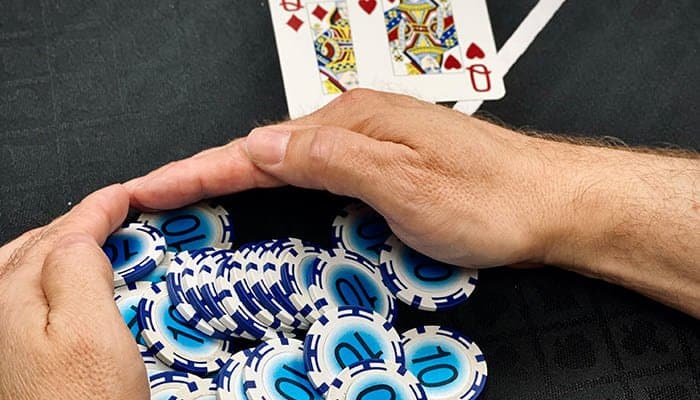 Learn more common poker phrases to master the game and play like a pro.
Flush and Straight Draws
A flush draw happens when a player needs one more card to complete a five-card flush, while a straight draw occurs when one card is needed to complete a sequence of five consecutive ranks. These situations provide additional excitement and tension to the game as players wait for the much-needed card. A successful draw can lead to hefty wins, but missing the draw (which is known as “whiffing”) can be devastating.
Hero
The “hero” refers to the player whose hand is being analysed. This term is often used in training videos and to illustrate strategy. The hero’s decisions, from betting to folding, are examined to provide insights into optimal gameplay. Understanding the hero’s point of view can help players fine-tune their strategies and improve their overall decision-making skills.
On the Tilt/On Tilt
Being “on tilt” describes a player reacting emotionally to bad luck, leading to poor decisions. Tilt can significantly impact a player’s game, making mental discipline a key skill in poker. For example, losing a big hand to a cooler can cause a player to go on tilt, leading to reckless bets and reckless decisions. Recognising and managing tilt is crucial for keeping your composure and achieving long-term success.
Sharks
Sharks are highly skilled and experienced players who often target less experienced opponents. Their confidence and aggressive playing style can intimidate others at the table. Sharks can easily read their opponents, exploiting weaknesses and maximising their winnings. While facing a shark can be challenging, paying close attention to their strategies can provide valuable learning opportunities for improving your own game.
Tanking
Tanking refers to a player taking a long time to make a decision, often during critical moments. While some consider this a legitimate strategy, excessive tanking can frustrate opponents and slow the pace of the game. Time banking, an online poker feature, allows players to extend their decision-making time when needed, but overusing it can attract criticism. Finding a balance between careful consideration and timely action is crucial here.
Whiff
To “whiff” means failing to improve your hand during a draw. For instance, if you’re one card short of a flush and the next card doesn’t help, you’ve whiffed. It’s a frustrating moment for any poker player, as it can turn a promising hand into a losing one. Learning to manage expectations and adjust your strategy when you whiff is an essential skill in poker.