

 Nederlands
 Deutsch
 Svenska
 Polski
 Suomi
Suomi Español
 Français
 Português
 العربية
 Bahasa Melayu
 Italiano
 ไทย
ไทย Türkçe
 日本語
日本語 Български
 Română
 Ελληνικά
 Dansk
Dansk 简体中文
简体中文 繁體中文
繁體中文 Afrikaans
 Shqip
Shqip አማርኛ
አማርኛ Հայերեն
 Azərbaycan dili
 Euskara
 Беларуская мова
 বাংলা
বাংলা Bosanski
 Català
 Cebuano
 Chichewa
 Corsu
Corsu Hrvatski
 Čeština
 Esperanto
 Eesti
Eesti Filipino
 Frysk
Frysk Galego
 ქართული
 ગુજરાતી
 Kreyol ayisyen
 Harshen Hausa
 Ōlelo Hawaiʻi
 עִבְרִית
 हिन्दी
 Hmong
Hmong Magyar
 Íslenska
 Igbo
Igbo Bahasa Indonesia
 Gaelige
 Basa Jawa
 ಕನ್ನಡ
ಕನ್ನಡ Қазақ тілі
 ភាសាខ្មែរ
 한국어
한국어 كوردی
كوردی Кыргызча
 ພາສາລາວ
 Latin
Latin Latviešu valoda
 Lietuvių kalba
 Lëtzebuergesch
 Македонски јазик
 Malagasy
 മലയാളം
 Maltese
 Te Reo Māori
 मराठी
मराठी Монгол
 ဗမာစာ
ဗမာစာ नेपाली
 Norsk bokmål
 پښتو
پښتو فارسی
فارسی ਪੰਜਾਬੀ
 Русский
 Samoan
 Gàidhlig
 Српски језик
 Sesotho
 Shona
Shona سنڌي
سنڌي සිංහල
සිංහල Slovenčina
 Slovenščina
 Afsoomaali
 Basa Sunda
 Kiswahili
 Тоҷикӣ
 தமிழ்
தமிழ் తెలుగు
 Українська
 اردو
اردو O‘zbekcha
 Tiếng Việt
 Cymraeg
 isiXhosa
 יידיש
יידיש Yorùbá
 Zulu
Zulu
As one of the oldest sports betting systems, pari-mutuel betting is often used in horse racing.
It can be applied to other sports as well including jai alai and greyhound racing. It is usually available for all sports events with a short duration and modified pari-mutuel systems are sometimes used in lottery games.
How Does Pari-Mutuel Betting Work?
Although it sounds complicated, pari-mutuel betting is easy to understand. Instead of betting on fixed odds, you wager on selections with probable odds. They are probable because the payout is determined by the number of bettors that have placed a bet and the total amount of money in the pool. Whenever a punter makes a selection, his wager goes into a shared pool. When the event is finished, the house takes its cut no matter the outcome and the winning bettors share the prize.
Let’s see an example using a horse race. There are four horses in the race, labeled #1, #2, #3, and #4. Bettors have already made their choices – a total of $400 were placed on horse #1; there’s a total of $300 on #2; $100 on #3, and $300 on #4. The betting pool total is $1,100. The house takes its 10% cut, leaving $990 in the pool – this is the prize winners will share.
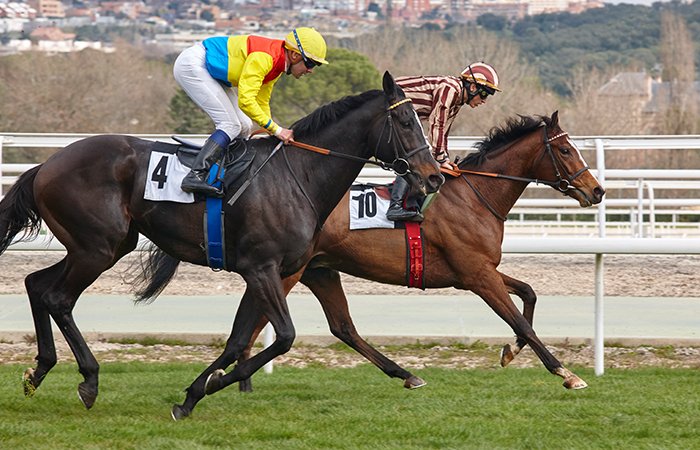
Next, in order to determine how much money can be made on each horse, the remaining total amount in the shared pool is divided by the amount wagered on each of the horses. This brings horse #1 to $2.475; #2 with $3.3; #3 with $9.9, and #4 with $3.3. These numbers indicate how much money you’ll get for every $1 wagered if your selection wins. It also determines the favorite, which is horse #1 in this case.
What are the Pros and Cons?
Like any other betting system, pari-mutuel betting has its own pros and cons. The most obvious benefit for punters is the lack of a bookmaker. This means lower commission fees and more money to be won – the dream of any bettor. Another obvious benefit is the shared pool prize. Especially in cases of popular events, there can be a lot of money in the pool to be won. The wide range of betting options surely makes pari-mutuel betting attractive. Even if you’re not that fond of predicting the winner, double or trifecta bets can still pay good money and are easier to get right.
On the other hand, the biggest problem with tote betting is the uncertainty. Unlike fixed odds betting, there’s just no way of knowing the real value of the odds since they’re constantly changing. Not knowing the value means you can’t tell if the wager is good or really bad, which can lead to huge losses.
Additionally, the odds can get skewed in a weak market with only one large bet. As punters can place any wager they want in this system, a bettor can put several thousand dollars in a particularly weak market, restricting the odds instantly. This will result in a reduced pay out for others who have placed the bet on the same horse or hound.