

 Nederlands
 Deutsch
 Svenska
 Polski
 Suomi
Suomi Español
 Français
 Português
 العربية
 Bahasa Melayu
 Italiano
 ไทย
ไทย Türkçe
 日本語
日本語 Български
 Română
 Ελληνικά
 Dansk
Dansk 简体中文
简体中文 繁體中文
繁體中文 Afrikaans
 Shqip
Shqip አማርኛ
አማርኛ Հայերեն
 Azərbaycan dili
 Euskara
 Беларуская мова
 বাংলা
বাংলা Bosanski
 Català
 Cebuano
 Chichewa
 Corsu
Corsu Hrvatski
 Čeština
 Esperanto
 Eesti
Eesti Filipino
 Frysk
Frysk Galego
 ქართული
 ગુજરાતી
 Kreyol ayisyen
 Harshen Hausa
 Ōlelo Hawaiʻi
 עִבְרִית
 हिन्दी
 Hmong
Hmong Magyar
 Íslenska
 Igbo
Igbo Bahasa Indonesia
 Gaelige
 Basa Jawa
 ಕನ್ನಡ
ಕನ್ನಡ Қазақ тілі
 ភាសាខ្មែរ
 한국어
한국어 كوردی
كوردی Кыргызча
 ພາສາລາວ
 Latin
Latin Latviešu valoda
 Lietuvių kalba
 Lëtzebuergesch
 Македонски јазик
 Malagasy
 മലയാളം
 Maltese
 Te Reo Māori
 मराठी
मराठी Монгол
 ဗမာစာ
ဗမာစာ नेपाली
 Norsk bokmål
 پښتو
پښتو فارسی
فارسی ਪੰਜਾਬੀ
 Русский
 Samoan
 Gàidhlig
 Српски језик
 Sesotho
 Shona
Shona سنڌي
سنڌي සිංහල
සිංහල Slovenčina
 Slovenščina
 Afsoomaali
 Basa Sunda
 Kiswahili
 Тоҷикӣ
 தமிழ்
தமிழ் తెలుగు
 Українська
 اردو
اردو O‘zbekcha
 Tiếng Việt
 Cymraeg
 isiXhosa
 יידיש
יידיש Yorùbá
 Zulu
Zulu
Whether you play European blackjack or any other single or double deck variant of this popular game, it’s essential to learn all about blackjack split and its rules. Knowing when to split cards can help players decrease the house edge and increase their own odds of getting the best possible hand.
When you play blackjack for real cash, splitting cards will effectively allow you to play with two individual hands. Having two hands means you’ll also have to double the size of your original bet, but it will also double the payout if you manage to defeat the dealer.
In this article, we’ll discuss the best card splitting strategy you can use to improve your chances of winning in a game of blackjack.
What Is Blackjack Split?
The option to split is offered to players when their initial two-card hand comes with two cards of the same value.
If they choose to split, they will split their hand into two separate ones and then receive an extra card for each of them.
As we already mentioned, splitting will require placing an additional stake on the new hand. The bet must be equal to the one made at the beginning of the game.
When to Split?
There are specific hands in blackjack, which require players to split. It’s the probability that dictates it’s favourable to do. On the other hand, there are hands when it’s advisable not to split, while in some instances, the dealer’s up-card determines whether players should split or not.
Although splitting improves your odds of winning, it doesn’t guarantee you’ll win. But if you follow the blackjack split rules, you are more likely to emerge victorious in the long run.
Always Split
Players should always split a pair of aces. There are plenty of cards with a value of ten in the deck, so making this move makes perfect sense. If you choose not to split, one of your aces will have a value of eleven, while the other will be given a value of one. Such a situation means that only a nine can result in twenty-one. Drawing a card whose value is ten will count both your aces as one.
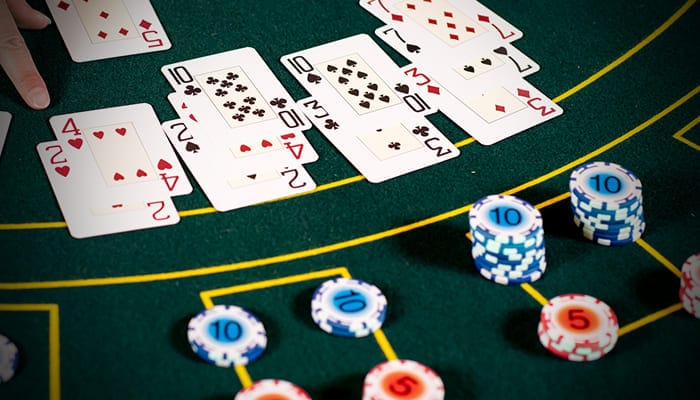 Here’s what you need to know if you want to master the strategy of splitting cards in Blackjack.
We should point out that having two eights is regarded as a relatively poor hand in blackjack, regardless of whether you split them or not. However, if you don’t split them, you won’t have much room for maneuver, as any card with a value of six or more will bust you. Splitting a pair of eights can help you get a more competitive hand.
When the Dealer’s Up-Card Determines the Split
If you have a pair of twos, threes or sevens, you should split them only if the dealer’s up-card is two, three, four, five, six or seven. Making such a move is likely to improve the competitiveness of your hand.
A pair of nines may sound good, but beating eighteen can easily be beaten. So if the dealer’s up-card is two, three, four, five, or six, you should split without hesitation.
If the dealer’s up-card is two, three, four, five, or six, and you have a pair of sixes, splitting the hand will significantly improve your chances of winning. Getting a ten after the split could give you an advantage over the dealer.